

Emergency Management Systems: What Keeps a Country Running Series
3.2 The Fabric

These are the structures that keep society coherent through crisis, that manage the continuity of society and connect us to each other.
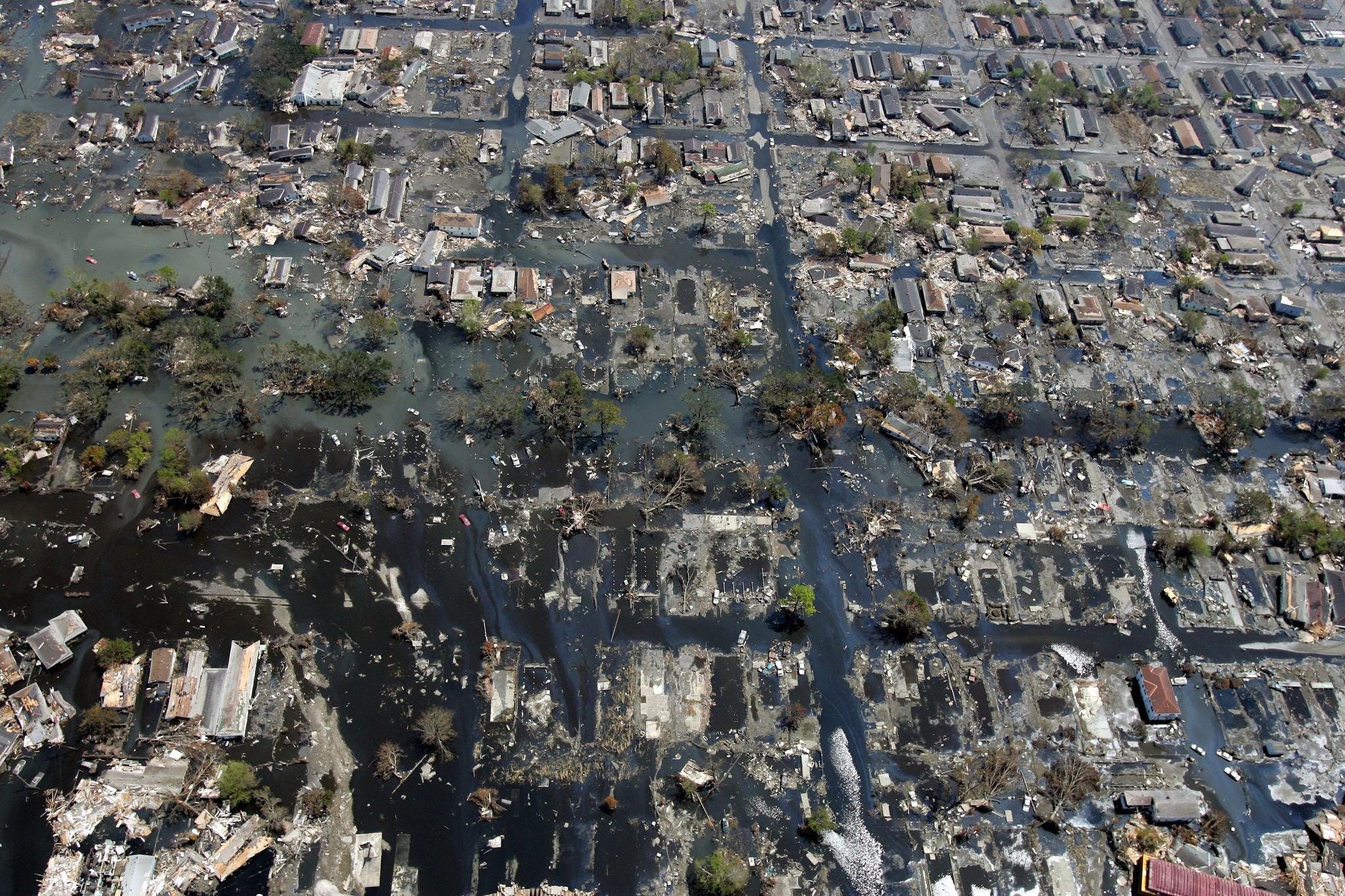
RECAP
This series looks at a country through an urbanist’s lens: as a network of systems that have to function together for life to feel stable. Altogether we’ll look at fifteen systems—public health, water, food, energy, environment, housing, transportation, labor, education, finance, digital infrastructure, emergency management, immigration, governance and culture.
If you missed the previous piece on Digital Infrastructure, you can find part 1 here and part 2 here.
Intro
Emergencies are generally considered out of the ordinary. “Normal” daily operations carry an expectation of smoothness, that the lights come on, that the roads hold, that the supply chain delivers, that daily life proceeds more or less as expected. While day to day life may have inconveniences, which are irritating, they are not emergencies.
We know this is not equally true everywhere. There are people today surrounded by military conflict, by unstable or duplicitous governance, by natural disasters, by unexpected risks to their lives that most people consider unimaginable. These are emergencies. They are points of duress, of broken systems, of suffering. But they are also, in their own way, a reminder of what the baseline goal is. Safety. While the true luxury of the existence of safety is the absence of the need to think about it.
Under ordinary conditions in functioning governments, emergency management sits inside every scale- local, state, federal, international. It has responsibilities, budgets tied to mandates, and those budgets come from taxes. The underlying social contract is something like this: if citizens experience a misfortune, natural or human-made, something will be there. Rescue teams. Supplies. Coordination. A plan.
Don DeLillo’s White Noise, published in 1985, opens with what he called “The Airborne Toxic Event,” a giant black chemical cloud released by a rail accident that forces an entire town to evacuate. The novel uniquely captures the human experience of emergencies: the rush, the disorientation, the fear, the chaos. The sense that death is looming and lashing but could somehow be tricked by labyrinthian efforts, abstracted science, confusion and miscommunication. It is a surreal, mordant and cheeky look at how ordinary people process the sudden intrusion of catastrophe into suburban life.
Nearly forty years after the novel was published, something very close to this actually happened in East Palestine, Ohio, a Norfolk Southern freight train derailed and caught fire, releasing a giant black cloud of vinyl chloride. Residents were evacuated. The air turned strange. Officials argued over data. People didn’t know what to believe or who to call. DeLillo had, with some accuracy, predicted the texture of the event. Both the novel and its real world counterpart open questions about what successful emergency management looks like, equally what failures look like and who’s responsible.
When you are in an emergency, the body narrows to survival. Heart rate rises, attention sharpens and time distorts. Your thoughts compress into immediate, strategic or reflexive actions.
Preparing for emergencies is the opposite. It requires quiet rooms, probability tables, infrastructure audits, procurement contracts and scenario exercises. It is imagining failures that have not happened and assigning budget to risks that may never materialize.
Preparing means planning, usually to prevent something that has happened from happening again. Data, governance, mutual aid agreements, pre-positioned supplies, interagency protocols, hazard mitigation plans. There are people whose entire professional lives are devoted to preparing for unfortunate events. Emergency management is a response, planning, coordination, governance, and increasingly, a climate system.
How It Works
Every country with a functioning government has some version of this system. The names change. Japan has its Cabinet Office Disaster Management division, Germany its Federal Office of Civil Protection and Disaster Assistance (BBK), the United Kingdom its Civil Contingencies Secretariat, the United States its Federal Emergency Management Agency (FEMA). The Sendai Framework, adopted by 187 countries through the United Nations in 2015, provides an international architecture for how nations are expected to plan, invest and coordinate. But beneath all of these structures, the mechanics are largely the same. Emergency management is a tiered system in which local capacity responds first, escalates to regional or national capacity when overwhelmed, and draws on international assistance when the national system itself is exceeded.
The principle is that emergencies are local first. A building fire is a city problem. A regional flood becomes a state or national problem. A pandemic or a major earthquake becomes an international one. What changes at each level is not the basic mechanics but the scale of coordination required and the resources available to deploy.
Before going inside the machinery, it helps to know how professionals organize the work. Emergency management operates across four phases: mitigation, preparedness, response and recovery that function not as a sequence but as a continuous cycle. A well-run system is always doing all four at once.
Mitigation is the fire resistant furniture in the classroom. The efforts to reduce the likelihood or severity of a disaster before it happens. This looks like flood barriers in the Netherlands, earthquake-resistant building codes in Japan, managed retreat from coastlines in New Zealand and firebreaks in Australia’s bushland. This is the work of the system that costs the least and gets funded the least, because it is invisible when it works.
Preparedness is the fire escape plan on the wall. It’s the institutional work of being ready. Training emergency responders, pre-positioning supplies, running simulation exercises that stress-test coordination between agencies, building mutual aid agreements, maintaining current emergency operations plans. Japan runs national disaster drills on September 1st every year involving millions of citizens and every level of government simultaneously. It’s the anniversary of the 1923 Great Kanto Earthquake. This preparedness event is treated as civic participation in emergency management.
Response is the fire alarm and evacuation. It’s the phase most people picture, when the emergency operations centers are activated, or the search and rescue teams are deployed, the fire truck arrives, a temporary shelter is established, etc. This is the phase where the gaps in the first two become visible. Response capacity can look adequate in exercises and collapse under the real conditions of a major event.
Recovery is the rebuild after the fire. It means restoring the environment and operations to something like normal life. Debris removal, infrastructure rebuilding, rehousing displaced residents, processing financial assistance. Recovery in some communities lasts years or decades, because the physical work depends on the systems for funding and executing it. The 2010 Haiti earthquake killed over 200,000 people. Sixteen years later, displacement and infrastructure failure are still features of daily life for large portions of the population.
Each of these phases requires people working across every scale of government, paid for by taxes, ideally operating in systems that are functional, fact-based and uncorrupted enough to do what they were built to do.
Command and control
The first question an emergency forces is a governance question: who has authority, and over what, and for how long? Without a clear answer, clashes and chaos compounds faster than the hazard itself.
Most countries resolve this through a pre-defined incident command architecture, a hierarchy of roles and jurisdictions that activates when normal governance is suspended or overwhelmed. In the United States, the Incident Command System (ICS) provides a common operational structure allowing personnel from dozens of agencies to work under unified command. Japan’s disaster response is coordinated through a Cabinet-level crisis management structure that can mobilize the Self-Defense Forces, prefectural governments and national agencies under a single operational framework within hours.
What makes this hard is that emergencies don’t respect jurisdictional lines. A flood crosses municipal and regional boundaries. A pandemic crosses every border simultaneously. A blackout cascades through interconnected infrastructure regardless of who owns which piece of it. The design challenge is coordination without command paralysis, getting agencies that report to different authorities, operate under different mandates and have different cultures to act in concert under stress.
A country’s emergency management system is, in a way, a test of whether it can temporarily centralize without collapsing democratic legitimacy. Emergency powers are the legal authority to suspend normal rules, compel compliance and redirect resources. They exist in most legal systems. How they are invoked, constrained and eventually withdrawn tells you something important about the underlying governance culture. The current president of The United States has called for emergency powers under several instances, subverting distributed decision making powers. France’s state of emergency invoked after the 2015 Paris attacks remained in force for nearly two years and was eventually partially absorbed into permanent law, a trajectory that civil liberties organizations documented with concern. New Zealand’s COVID-19 response invoked emergency powers decisively but with clear legislative constraints and regular parliamentary review. All this to say that internationally the machinery is similar but the institutional culture around it differs enormously.
Risk assessment and scenario planning
The most resilient emergency management systems treat disasters not as exceptional events but as probabilistic ones. This means outcomes with known probability distributions that can be mapped, modeled and planned for.
Hazard mapping identifies where risks concentrate geographically: floodplains, earthquake fault zones, wildfire corridors, storm surge exposure, industrial hazard zones. Vulnerability assessment layers onto this the question of who and what is exposed: which populations, which infrastructure, which economic activities sit in the path of known hazards. The combination produces risk profiles that should drive land use planning, building codes, infrastructure investment and pre-positioning of emergency resources.
Simulation exercises stress-test these plans before events reveal their gaps. The Singaporean government runs whole-of-government exercises that simulate cascading infrastructure failures across power, water, digital and transport systems simultaneously. Germany’s BBK runs LÜKEX exercises, national-scale simulations involving federal ministries, state governments and critical infrastructure operators specifically to find coordination failures before they become operational failures. The point is to build the institutional muscle memory and relationship infrastructure that transfers across event types.
Communication
Every major disaster in modern history has had an information dimension that shaped outcomes as much as physical capacity did. Who knew what, when. Who trusted the warning. Who received the alert in a language they understood. Who could get through to emergency services when networks were overwhelmed.
Early warning systems are among the most cost-effective investments in emergency management. Bangladesh dramatically reduced cyclone mortality over three decades through a combination of coastal embankments, cyclone shelters and, critically, a community warning network of over 55,000 trained volunteers who carry megaphones into villages when alerts are issued. The 2004 Indian Ocean tsunami killed over 200,000 people partly because no regional early warning system existed in the Indian Ocean at the time. One was built in the years that followed. The 2011 Tōhoku earthquake, a 9.1 magnitude event followed immediately by a tsunami, was one of the most powerful double-strikes any country has ever absorbed, and Japan’s warning and response infrastructure meant significantly fewer people died (+18,000) than the scale of the event would have predicted. Fukushima, the nuclear plant disabled by the tsunami, was the opposite. The death toll was a fraction of the wave that preceded it, but institutional coverup and regulatory capture turned a survivable crisis into mass displacement, destroyed livelihoods and a collapse of public trust that outlasted the radiation itself.
Warning systems work only when the public understands them, trusts them and has the capacity to act on them. This is a social infrastructure problem as much as a technical one. In 2018, a false ballistic missile alert in Hawaii reached over a million people and was not retracted for 38 minutes. “In a subsequent survey, 28% of respondents initially believed the alert, 45% were unsure, and 27% did not believe it”. WIkipedia Misinformation and rumor in the absence of trusted official communication can cause deaths directly. People making decisions based on bad information, panic overwhelming exit routes and communities refusing evacuation because previous warnings proved false.
Logistics
Emergency response is often a logistics problem. Getting the right resources, ie. water, food, medical supplies, fuel, shelter materials, personnel to the right places before the people who need them run out of time.
Pre-positioning strategic national stockpiles of medical supplies, fuel reserves, water purification capacity and emergency food stores means they are available when they’re needed. The location of these stockpiles, and the transportation infrastructure to deploy them, determines how fast the system can respond. In Belgium, a routine storage clearout destroyed tens of millions of stockpiled masks between 2015 and 2018, leaving the country in a critical shortage when COVID arrived two years later. Countries that had invested in domestic stockpiles and diversified supply chains (South Korea, Taiwan, Germany) absorbed the shock differently than those that had not.
Dense cities with well-maintained infrastructure can distribute resources efficiently but are also more vulnerable to cascade failures. Dispersed rural populations are harder to reach but may be more locally self-sufficient. The design of cities, including where hospitals are located relative to flood zones, whether road networks have redundancy, or how water systems are distributed doubles as emergency infrastructure when the time arises. In Rotterdam, where 80% of the city sits below sea level, urban planners have responded by redesigning public squares to double as flood basins, parking garages to hold storm water and rooftops to absorb rainfall.
Urban planning
Behind every fire station, hospital and emergency depot is a planning decision: where to put it, how many to build and what response time it needs to achieve. This is emergency management as spatial policy, and it is one of the most consequential parts of the system.
Fire station placement is governed by response time targets. The standard most cities aim for is a five-minute response time, the window within which a structure fire can still be controlled and a cardiac arrest can still be survived. Planners use population density, traffic conditions, distance to existing stations, hazard locations and road networks to model where gaps exist and where new stations would have the most impact.
Hospital location follows similar logic but with higher stakes and longer lead times. A trauma center placed inside a flood zone could become unavailable when it’s needed most, to offer a design failure that has played out in hurricanes and floods across multiple continents. In many cities, hospitals were built where land was cheap or where donors wanted them, not where hazard mapping would have placed them. Retrofitting that geography is expensive and slow. To my view, the sound argument is that emergency infrastructure should be treated like any other critical utility in land use planning.
The same spatial logic applies to emergency supply depots, evacuation routes, shelter locations and even the redundancy of road networks. A city with a single bridge as its only evacuation corridor has embedded a vulnerability into its geography that no amount of planning can really compensate for.
Infrastructure resilience
Emergency management intersects with every piece of physical infrastructure: energy grids, flood control systems, hospitals, bridges, digital networks and water systems. The more interdependent those systems are, the more cascading their failures in times of emergency.
The 2021 Texas winter storm is a clean case study in cascade failure, and in how emergency management breaks down when politics enters the room. A cold snap that would have been manageable in a better-prepared grid instead cascaded: natural gas supply lines froze, taking down the generation capacity that heats 40% of Texas homes; electrical failure disabled heating; lack of heating froze more pipes; water system failures followed. Over 200 people died. Then, as millions sat without power in the cold, Governor Abbott went on Fox News and blamed wind turbines. The data showed the opposite: natural gas had failed at five times the rate of renewables. Wind turbines in cold climates are routinely winterized. Texas simply hadn’t bothered. The failure was not the cold, it was a decade of ignored warnings and, when the moment came, a governor on cable news blaming renewables.
Japan’s approach to urban infrastructure as emergency infrastructure is worth examining. After the 1995 Great Hanshin earthquake killed over 6,400 people in Kobe, Japan undertook systematic retrofitting of buildings, elevated highways, and utility systems to earthquake standards. They allocated over $58 billion to restore and redesign infrastructure, housing and public facilities. Schools were rebuilt as designated evacuation centers with food and water stockpiles. Hospitals were seismically upgraded. The 2011 Tōhoku earthquake, far more powerful than Hanshin, killed fewer people from building collapse than Hanshin had, because the infrastructure had been redesigned in the intervening sixteen years.
Financial architecture
Financial shock absorption includes insurance systems, government relief funds, fiscal flexibility, and reconstruction financing, and the design of these mechanisms shapes who recovers, how fast, or whether they recover at all.
Countries with sophisticated parametric insurance systems, where payouts trigger automatically based on measurable event parameters like wind speed or seismic intensity, rather than requiring individual damage claims, move money far faster than traditional claims-based systems. The Caribbean Catastrophe Risk Insurance Facility (CCRIF), a regional risk pool serving small island nations, paid out to Barbados within two weeks of Hurricane Elsa in 2021.
At the national level, the difference between countries that absorb disaster costs and those that are structurally destabilized by them is largely a function of fiscal flexibility, pre-arranged credit facilities, and the depth of social insurance systems that keep household consumption from collapsing in the aftermath. Emergency management is fiscal management under compression and the fiscal design choices made in ordinary times determine the shape of recovery in extraordinary ones.
The public-private line
Emergency management sits on one of the fault lines where societies decide what belongs to the commons and what belongs to the market.
Fire protection was not always a public service. In the 18th and early 19th century in England and the U.S., private fire brigades operated on subscription models, they would affix metal plaques to insured buildings, and if your house burned, the brigade would respond if your plaque matched their company’s. There’s a popular myth that uninsured buildings burned but it’s not been supported by documented histories. What was documented is unproductive rivalries between companies. The obvious collective action failure eventually produced public fire departments funded by taxes, and today fire protection is almost universally treated as a public good. The truck that saves your house is a fully publicly funded service in virtually every country.
However, in many countries the ambulance that arrives for the person injured inside that house is not part of the public fire or police service. Emergency medical transport is often operated by private companies working under contract with municipalities or hospitals, and these providers can bill patients or insurers directly. This creates a revenue model that has no equivalent in fire or police services, which are almost always funded entirely through public budgets.
Historically, ambulance care did not begin as a formal public service. Before the 1970s many communities relied on funeral homes, hospitals, or volunteer rescue squads to transport patients. When modern emergency medical systems began to develop in the late twentieth century, some cities built publicly operated ambulance services, while others simply formalized the private operators that were already providing transport.
In the United Kingdom, ambulance services are part of the National Health Service, fully public, free at the point of use. In Germany, EMS is largely run by nonprofit organizations like the Red Cross and Malteser under public contracts. In the United States, ambulances are often private and billed as part of the healthcare system. A 911 call may send a vehicle that is outside your insurance network, leaving patients responsible for thousands of dollars in charges.
The deeper point is that the public-private boundary in emergency services was not drawn by principle. It was drawn by history, by accident, by whoever happened to be providing the service when formalization occurred. What society decided to treat as a collective responsibility (the building, the street, the fire) and what it left to the market or the individual (the body inside) reflects choices that are confusing but largely unexamined.
What’s breaking & What responsible stewardship looks like
Failures in emergency management more or less cluster around the same structural problems: chronic underinvestment in the unglamorous phases, coordination that works in exercises and collapses under real conditions, a climate that is reorganizing risk faster than institutions reorganize themselves and a political culture that is rescue, not prevention, focused.
But the system is not uniformly struggling. With each of the typically encountered issues are institutions, researchers and communities that have solved or avoided these problems in ways worth understanding. What follows looks at both.
Prevention
Across most countries, emergency management funding flows overwhelmingly toward response and recovery. These are the visible, politically legible phases and they take away from mitigation and preparedness, which are invisible. The return on mitigation investment is not contested: studies consistently find that every dollar spent on hazard mitigation saves several dollars in future disaster costs. So, the problem is not the math, it is the political economy. Prevention has no ribbon-cutting ceremony and a flood that didn’t happen produces no headlines.
The consequence is that the same disasters recur. After the 2021 German floods that killed over 180 people in the Ahr valley, investigations found that flood risk maps had been available, that local officials had been warned, and that land use planning had continued to permit development in high-risk zones regardless. After the 2011 Brisbane floods, the final inquiry report found that dam management protocols had been inadequate for years and that warnings had gone unheeded.
Some governments have broken this pattern. The Netherlands treats flood prevention not as a cost but as a national survival condition.Approximately 26% of the country is currently below sea level, but up to 65% would be under water without flood defenses. Its Delta Programme commits to continuous investment in flood protection infrastructure adjusted to long-term climate projections, funded by a dedicated national budget line that survives changes in government. It is expensive, slow and largely invisible to the public. It is also the reason the country functions.
Japan’s post-Kobe reconstruction was a $58 billion program that redesigned schools as shelters, seismically upgraded hospitals and rebuilt elevated highways. The Tōhoku earthquake tested that investment and it held.
Capacity
Emergency management is local first by design. In practice, the local level is where the system is most thinly resourced. A July 2025 study by Argonne National Laboratory, the most comprehensive survey of US emergency management capacity conducted to date, found that more than half of all local emergency management agencies have one or fewer permanent full-time employees. In small population jurisdictions, 73% operate with one or fewer staff. Nearly a quarter have zero full-time employees at all. Most local directors are dual-hatted, the same person serving simultaneously as emergency manager, county administrator, public information officer, or fire chief. Respondents linked small staff sizes directly to burnout. When a major event exceeds local capacity, which major events almost always do, the quality of escalation to regional and national resources determines outcomes.
The 2023 earthquake in Turkey and Syria killed nearly 60,000 people and failed at multiple levels simultaneously. In Syria, the main border crossing closed for three days after the earthquake, Turkish border staff had left to deal with their own dead. Humanitarian actors who had pre-positioned supplies inside Syria before the crossing closed were the ones who reached people first. In Turkey, post-event investigations found that seismic building code enforcement had been systematically traded away: in 2018, the government issued a construction bypass allowing over 10 million building owners to pay a fee rather than bring non-compliant structures up to code. The state collected $3 billion. The buildings stayed and when the earthquake struck, they fell.
Cuba’s community-level civil defense system is one of the most studied examples of low-cost, high-effectiveness emergency management. The UN’s disaster reduction body has described it as a model that could be applied in countries at any income level. The figures are striking: Hurricane Georges killed four people in Cuba in 1998 and approximately 600 in neighboring countries with similar or better economic conditions. Hurricane Charley killed four in Cuba and 30 in Florida. Disaster preparedness is part of the national education curriculum from childhood. Local authorities maintain records of who needs special assistance. Every institution mobilizes 48 hours before a storm hits.
Equity
The geographic and demographic patterns of who dies in disasters are not random. They reflect accumulated decisions made over decades before any emergency occurs, decisions about land use, infrastructure investment, political representation and economic exclusion. The neighborhoods that flood are disproportionately the ones where low-income and minority populations were concentrated by discriminatory housing policy. The buildings that collapse are disproportionately the ones built without enforcement of safety codes in places where residents lacked the political power to demand it. The communities that recover slowly are disproportionately those with the least access to insurance, banking, legal representation and political connection.
This is not unique to any one country. After Cyclone Idai struck Mozambique, Zimbabwe and Malawi in 2019, killing over 1,300 people, the communities most severely affected were those with the least formal land tenure, the least access to early warning systems in local languages, and the least capacity to access recovery financing.
Some of the most serious attempts to strengthen emergency response are happening at the intersection of community organizing and emergency planning. A growing number of cities have begun establishing community resilience hubs in trusted institutions such as libraries, community centers and churches. Programs in cities including Portland, Baltimore and Detroit are designed to provide emergency resources during disasters, but they also serve a quieter function: maintaining relationships and communication channels long before an emergency occurs.
Disaster researchers increasingly emphasize that warnings are only effective when they come from institutions people already trust. Evacuation orders, shelter instructions and health guidance depend as much on social credibility as on technology. In this view, emergency preparedness is about the civic infrastructure that makes people believe the warning when it arrives.
Bangladesh’s Cyclone Preparedness Programme is the most compelling large-scale model. The 55,000-volunteer warning network works not because of the megaphones but because the volunteers are from the communities they serve, speak the languages, know who cannot walk to a shelter and are trusted in ways that official communications are not. Over three decades, cyclone mortality in Bangladesh has fallen dramatically even as storms have intensified.
Cascade failure
Modern disasters are rarely single-system events. More often they are cascade failures. When one system goes down it takes others with it, each failure creating conditions for the next. The more interconnected and interdependent a society’s infrastructure, the more catastrophic and difficult the cascade becomes. This is the systems lens that emergency management has been slowest to fully integrate.
The 2021 Texas winter storm is the clearest recent example. Natural gas supply lines froze, reducing generation capacity. Electrical failure disabled heating. Loss of heating froze more pipes. Water system failures followed. Hospitals operated on backup power while simultaneously managing a surge of cold-exposure patients. The grid failure was the trigger, but the deaths came from the cascade: hypothermia, carbon monoxide poisoning from improvised heating, inaccessible medical care. Each system failure compounded the others. Over 200 people died in one of the wealthiest states in the world.
What makes cascade failure so difficult to manage is that systems are designed and governed separately. The energy grid has its regulators, the water system has its managers, the hospital network has its administrators. No single institution owns the interfaces between them, which is precisely where cascades propagate.
Researchers at ETH Zurich and Nanyang Technological University, working within Singapore’s Smart Nation programme, have built simulation tools specifically designed to model simultaneous failures across power, water, transport and supply chains. They visualize how a single grid failure cascades before it spirals out of control. The work reflects a systems-of-systems approach that most emergency management institutions still haven’t adopted: treating the interfaces between infrastructure networks as the primary site of risk, not the individual systems themselves.
Designing cities and infrastructure systems with cascade failure in mind means building in redundancy at the interfaces: backup power for water pumping stations, hospital fuel reserves calibrated to extended outages rather than hours, telecommunications systems with independent power supplies, road networks with more than one way in and out. While the upfront cost is more expensive than single-point optimization, it can increase systems resilience in emergency situations, saving lives and reducing damages long term.
Climate adaptation
Historically, emergency management systems have been built around historical hazard records. Return periods like the hundred-year flood or the fifty-year drought, were the planning baseline for flood maps, building codes and infrastructure design. Climate change is destabilizing those assumptions faster than institutions can update them. Events that once defined the edge of the record are now occurring repeatedly within a few decades. Floods classified as “hundred-year” events have struck the same regions multiple times in a generation. Wildfire seasons in western North America now extend months longer than they did historically. Hurricanes are intensifying more rapidly over warmer oceans, leaving less time for evacuation planning. Sea-level rise is turning what was once occasional nuisance flooding into regular structural inundation in coastal cities.
The implication is not only that disasters are becoming more frequent or more severe but that the entire planning architecture of emergency management was designed for a relatively stable climate record. That system assumed risk could be updated periodically as new data accumulated. Instead, flood maps, evacuation models and infrastructure standards increasingly require continuous revision rather than generational updates. Most institutions were not designed to operate on that timescale.
The places doing this best are treating climate projection as a core input to all planning decisions. Rotterdam’s water squares, flood basins and green roofs are urban infrastructure designed for the climate conditions of 2050. New Zealand’s managed retreat program is buying out and relocating properties in high-risk coastal zones before they flood rather than after. Even though this is politically difficult and expensive, it’s one of the most honest institutional responses to climate-driven risk anywhere in the world. It acknowledges that some places cannot be protected and must be abandoned.
First Street Foundation’s work in the United States is significant for a different reason. By building a national flood risk database using current climate modeling (rather than FEMA’s outdated flood maps) they have put accurate risk information into the hands of property owners, mortgage lenders and insurers. Markets are now pricing risk that the official planning system was not acknowledging. That repricing is, slowly and imperfectly, forcing land use decisions that political processes had avoided.
Governance
Emergency management is a technical function that operates inside a political system, and the relationship between the two is one of the most consequential variables. When political messaging takes precedence over operational accuracy, like when a governor blames wind turbines for a gas grid failure, when a death toll is reported at 64 when the true number is 4,645, the damage extends well beyond the immediate event. It erodes the institutional trust that warning systems, evacuation orders and public health guidance depend on. A population that has been misled about one disaster is less likely to respond to the next warning.
The countries with the strongest track records have emergency management that functions as a technical, data led system with enough institutional independence to deliver accurate information and make hard decisions that are politically uncomfortable.
Taiwan’s Central Epidemic Command Center, activated during COVID-19, is one of the clearest recent examples of what this looks like in practice. Drawing on lessons from SARS in 2003, Taiwan built a command structure with clear authority, transparent public communication and the operational capacity to move faster than the virus. It did not politicize the response. By the end of 2020, Taiwan had recorded fewer than a dozen COVID deaths. The infrastructure that made this possible had been built seventeen years earlier, after a previous failure, by people who took the next emergency seriously before it arrived.
The reverse is also instructive. The fragmented federal response to Hurricane Maria in Puerto Rico, the delayed arrival of aid, the contested death toll and the slow pace of reconstruction was primarily a governance failure. It was shaped by the ambiguous political status of an unincorporated territory of the United States, by an administration that was slow to acknowledge the scale of the crisis, and by institutions that were not structured to treat Puerto Rico’s needs as equivalent to those of a state.
Finance
The funding model for emergency management in most countries was designed for a world where major disasters were episodic. It is now operating in a world where they are continuous. FEMA’s Disaster Relief Fund has been in near-constant deficit pressure for most of the last decade, forced to delay recovery work for past disasters in order to respond to newer ones. The 28 separate billion-dollar weather and climate disasters the United States experienced in 2023 alone were not an aberration but a new baseline.
Insurance markets are already responding to this shift. Insurers have begun reducing exposure in regions where climate risk is rising fastest, particularly wildfire-exposed areas of California and hurricane-prone coastal states. Major carriers have stopped issuing new homeowners policies in parts of these markets or raised premiums sharply. Reinsurance firms including Swiss Re and Munich Re have repeatedly warned that climate-driven catastrophe losses are pushing parts of the insurance system toward structural retreat.
As mentioned, the Caribbean Catastrophe Risk Insurance Facility is worth examining as a structural alternative. By pooling risk across small island nations and using parametric triggers that release funds automatically based on event measurements rather than individual claims, CCRIF puts money into affected communities within weeks rather than months or years. It cannot solve the underlying problem of accelerating hazard frequency, but it demonstrates that financial architecture can be designed for speed and equity rather than optimized around insurer profitability.
Germany’s post-flood recovery financing after the 2021 Ahr valley disaster mobilized over €30 billion in reconstruction funding within months, a demonstration of what fiscal capacity combined with political will can accomplish. It also showed its limits, with reconstruction at a speed and scale which produced its own problems, including rebuilding in some of the same flood-prone locations rather than taking the harder decision to relocate.
The gap between what emergency management can do and what it does is not a knowledge problem. The case studies exist, the methodologies are documented and the return on mitigation investment is not seriously disputed. What fills the gap is a political economy that rewards rescue over prevention, a governance culture that confuses visibility with value and a financing architecture that shifts cost onto the people least able to carry it. The disasters that kill people this decade are largely unsurprising. They are the delayed consequences of decisions already made, or deliberately not made, in the quiet before the storm.
I hope this piece has given you an introductory “under the hood” look at Emergency Management Systems. As you might imagine, there are endless resources available on this topic. I’ve highlighted a selection below that I’ve found particularly useful, from research centers to operational tools to organizations doing interesting work in the field.
What readers will likely find most interesting, however, is how the system works where they live. Emergency management is local by design. The agencies, warning systems, evacuation plans and recovery structures that matter most are the ones operating in your own region. Many of the tools below make it possible to explore those systems directly: to see your area’s hazard maps, understand the risks your community plans for, and find the institutions responsible for responding when something goes wrong.
See you next week for Immigration.
Resources
Understand how it works
FEMA National Preparedness Report Published annually, it evaluates where the emergency management system is working and where it is falling short.
Samantha Montano- Disasterology A sharp critique of the disaster response system. Montano treats emergency management as a social discipline rather than a bureaucratic one.
National Emergency Management Association (NEMA) The ground-level view from state emergency directors. Essential for seeing the friction between federal mandates and local capacity.
PreventionWeb (UN Office for Disaster Risk Reduction) The United Nations’ global knowledge platform for disaster risk reduction. Country risk profiles, research, practitioner tools and case studies from around the world.
Natural Hazards Center, University of Colorado Boulder One of the leading academic hubs for disaster research. Produces policy-relevant work on evacuation behavior, recovery dynamics, equity and community resilience.
Understanding Risk Community (World Bank) A global network of practitioners working on disaster risk modeling, insurance innovation, satellite mapping and early warning systems.
First Street Foundation Risk Factor High-agency modeling that bypasses legacy government flood maps to provide property-level risk scores for flood, fire and heat.
The Prepared A preparedness resource that strips away fear-driven “prepper” culture and focuses instead on logical, tiered resilience planning.
Low-Tech Lab An open-source library of sustainable, low-tech solutions for water, energy and food systems that can operate even when centralized infrastructure fails.
CCRIF SPC Caribbean Catastrophe Risk Insurance Facility The world’s first multi-country parametric disaster insurance pool. A clear example of financial architecture designed for rapid payouts rather than traditional claims processing.
EM-DAT Disaster Database (Centre for Research on the Epidemiology of Disasters, Belgium) The most widely used global disaster dataset. Maintained in Brussels and essential for understanding long-term disaster trends worldwide.
See It in Action
Rebuild by Design Design-forward post-disaster recovery that integrates resilience into urban form.
Team Rubicon Veteran-led disaster response organization that has become one of the most effective voluntary response organizations in the country, deploying to disasters domestic and international.
PetaBencana.id: A radical, crowdsourced model. This platform uses AI to scrape social media and turn citizen reports into real-time, high-resolution flood maps.
Field Ready: They 3D-print medical supplies and repair parts in disaster zones, bypassing broken supply chains entirely to solve local problems on-site.
Common Ground Collective: Born from the failure of the Hurricane Katrina response, they provide a blueprint for “solidarity, not charity,” showing how decentralized, community-led recovery can outperform state machinery.
Zurich Climate Resilience Alliance The Post-Event Review Capability is an independent methodology for analyzing why a hazard became a disaster.
Australian Institute for Disaster Resilience A practitioner-focused organization producing operational case studies and lessons from disasters across Australia and the Asia-Pacific.
Track What’s Happening
NOAA Billion-Dollar Weather and Climate Disasters The data behind the headline numbers on disaster frequency and cost. Essential for understanding the scale of what the system is being asked to absorb.
Paradise Rebuilt Track the ongoing recovery and reconstruction story of Paradise, California, the town destroyed in the 2018 Camp Fire. A long-form ongoing case study in what recovery actually looks like.
MIT Urban Risk Lab Research on urban resilience with direct application to planning practice, especially in climate-vulnerable and under-resourced communities.
Climate Central Surging Seas Risk mapping for sea level rise and coastal flooding. Useful for understanding the geography of long-term emergency management challenges.
Natural Hazards Center, University of Colorado Boulder The leading academic center for disaster research in the US, producing policy-relevant work on everything from evacuation behavior to the long-term social dynamics of recovery.
Sentinel Hub / EO Browser: This tool allows you to access raw satellite imagery for free. You can track real-time wildfire smoke or flood progression anywhere on Earth without waiting for an official report.
Broadcasting World (LiveATC/RadioReference): These sites allow citizens to listen to emergency radio frequencies, providing the most unvarnished “track what’s happening” experience possible during an event.
Understanding Risk (UR) Community: A global community of 13,000+ practitioners sharing the most innovative work in risk identification, from satellite mapping to using AI for instant insurance payouts
Global Disaster Alert and Coordination System (GDACS) A joint EU–UN platform providing real-time disaster monitoring and early impact estimates for humanitarian responders.
Pacific Disaster Center, DisasterAWARE One of the most advanced hazard monitoring platforms in operation, used by governments and international organizations worldwide.